
Stop Cramming AI Into Everything!
The troubling rise of AI on low tech

I noticed it earlier this year with my review of the Unnecto Snap, a simple phone with a lackluster QWERTY keyboard. The device had all the basics (calls, texts, music), but in tow the makers of the phone decided to add an AI GPT “helper.” Since then, more and more companies are bowing to the latest trend in technology. AI is now integrated in e-ink tablets like the ReMarkable, regular smartphones, and soon, disturbingly, more dumbphones.
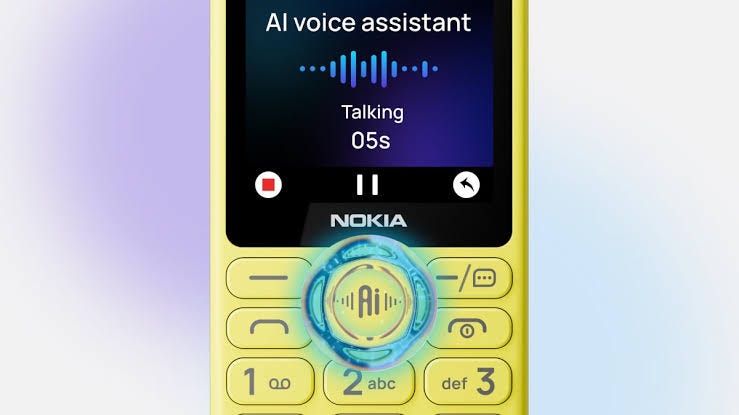
The latest company to adopt AI into their simple devices is HMD, a juggernaut with the rights to the Nokia name. The way they are doing it is utterly ridiculous, however. They are adding it to their phones front and center, but you only get to use it for 180 days. After that, you have to subscribe to their AI service via smartphone. Yes, you read that right. A dumbphone user purchases this phone, gets a taste of the AI “goodness”, and then if they decide it’s actually valuable for them, they have to go get a smartphone, download an app, and subscribe to it to continue using the AI on the dumbphone. Absolutely bonkers!
The troubling rise of AI into the business space is one thing. Trying to integrate AI into every part of society is the next challenge we will face as digital minimalists. Today, I hope to provide some thoughts into this craze and help you balance the reality of AI with the need for more offline in your life.
Does AI belong anywhere?
Before we go ban AI from the world, I think it’s important to recognize how technologies gain hold of our cultural imagination. First, they are introduced and many early adopters get to try them out. After a certain period, every day people find useful nuggets from the technology and start integrating it to their routines. Finally, the technology becomes dominant, extractive, and used throughout society.
This pattern happened with television, personal computers, the microwave, air conditioning, and many other technologies. In the AI conversation, we are still in level 1, even though companies will make you believe that everyone and their mom uses it. And that’s where I want to make the first point:
AI companies are selling the idea that their tools are essential to modern life, but the truth is simpler: plenty of people live perfectly well and will continue to do so without the constant stream of chatbot‑generated slop.
Moreover, the data reflects that AI companies are losing the cultural and economic battles. They are in spiral trying to build super-intelligence without noticing that more and more people don’t want these products in the first place. Now, let’s be clear. These AI companies will survive, but their value will be defined by what they can realistically replace (automation, rote work, boring tasks), instead of the magical fantasies (curing cancer, world peace, replacing all software workers) they are selling.
This brings us to the proper place for AI in our society. AI belongs in the world if and only if:
It’s local, meaning that it doesn’t use large amounts of resources or data to run. In other words, you can run it locally on your computer like a program.
It’s well defined for a single-task as a helper not a generator. Something like transcribing audio or recognizing patterns in a document, instead of “writing an essay” or “composing music” devoid of the human touch.
It’s trained with permission from authors, musicians, coders, instead of the current extraction that Empire of AI detailed.
It’s accountable to the people it affects, meaning its decisions can be inspected, challenged, and corrected instead of buried inside opaque corporate systems.
It’s optional rather than imposed. AI should be something individuals choose to use, not something companies force into everyday tools, workflows, or devices.
Unfortunately, given that these requirements won’t be amenable to OpenAI or Anthropic, I will now move into how you can resist these technologies and move towards a human centered future.

Embrace Skill Building
The reason why AI replaces workers is not because people lack value. It replaces them because AI presents itself as more capable than the average person. For example, when an employer wants a website built, AI looks (key word “looks”) like a complete solution. It promises to code, design, write copy, generate marketing assets, and turn the whole project into something finished.
However, the reality is that projects that use AI without human direction or expertise end up costing way more than expected. Take the example of Ford. During their October 2025 earnings call, they announced that AI would replace humans to help with quality safety checks and supply disruptions. After multiple failures and the erosion of profits due to warranty issues, they are now rehiring humans that have actual expertise on the field. The focus here is the expertise portion. Ford is not rehiring people to do menial tasks; they are looking for people that have skills that AI cannot replicate.
Therefore, our task as digital minimalists is to stay active in our own skill development. While this applies to work (work conferences, professional development, etc.), gaining new traits is most important in the area of leisure. Painting, cooking, woodworking, bread-making, any hands‑on craft should be prioritized as an offline encounter that provides respite from the always connected world. The act of learning expands our experience of being human, and that is something no machine can replace.
Over time, if you focus on building new skills, you will find that AI is no threat to you. The AIs may be able to replicate a version of your work, but they cannot communicate the soul behind it. That is what makes you valuable.

Support Human Even If It Costs You More
This is a touchy topic due to the rising cost of everything this year. However, I want to encourage you to think about where your money is going. Is it supporting corporations that are trying to erase the human experience or going towards the human ecosystem that keeps your community alive? It’s easy under the capitalist system to prioritize your own pocket instead of your neighbors, but you may be leaving more on the table than you can realize.
Last year, I got a first glimpse of what this looks like. I started attending community meetings at the local coffee shop every Friday. It cost me around $15 for a coffee and a small breakfast burrito each week. However, what I have gotten in return has been much more valuable than the roughly $780 I spent at the local spot. It got me friendships, connections to the local issues, and some freelance jobs that I would have never imagined. It allowed me to experience offline more often by getting to know the local walking club and some community organized bike rides. If anything, it got me out of the house and off my computer as a reminder that not everything needs to be productive all the time.
I believe this principle goes beyond the usual “buy local” advice. Supporting the human ecosystem can guide the choices you make when working on a new project, signing up for a new online service, or comparing quotes for a kitchen renovation. In all scenarios, we must choose to prioritize the human default instead of the machines that are trying to replace us. In the end, you may gain a connection that you didn’t know was possible and a lasting relationship that will make your life all the better for it.
Turn Off The AI Pipeline
My final piece of advice for those of us that care about the future of humanity is to turn off AI features or look for alternatives when possible. I know that this may not be feasible if your work decides which platforms to use for your job, but you still have a choice.
For example, you can use a different search engine that doesn’t do AI summaries. Or maybe switch to an email provider that is not training their GPT model on your company secrets or suggesting replies that don’t really make sense. Maybe when a company announces that AI is coming, you find a competitor that does not. The reason behind this is simple: AI needs data to function. When we don’t feed it, it dies.
Another way to turn off the vast amounts of information is to spend more time offline. Go on a walk, take a break in the mountains, hang out in real life with people. The less you depend on the web infrastructure and the more you focus on the natural world, the more you contribute to the human project and step away from the corporate systems that profit from your attention.
Conclusion
If you care about a human centered future, you have to start with yourself and expand outwards. Start building your knowledge base in your brain instead of relying on the chatbot to do it for you. Invest in the local relationships and forget about the “advice” the machine could give you. Finally, turn off the data you feed them and take some time for yourself. The more we do this, the more obvious it becomes that the cure for our hyper‑connected world is not another shiny product. It is the simple act of living offline, where human life actually happens.