

Introduction
Earlier today, I read an article by Elana Klein in WIRED that ended with a concerning conclusion: “The term ‘phone addiction’ has wiggled its way into the common vernacular and has become a near‑universal self‑diagnosis among my cohort [Gen Z]. But that doesn’t feel quite right to me. I’m not addicted to my phone. I am my phone… ‘Phone enmeshment’ feels more accurate. If I ditch the device, part of me will vanish with it. I’ll face the unextended version of myself. I’m not sure I care to meet her.”
As I sat with her words, I realized what Elena is trying to communicate. She is saying that her unextended self, the one without a smartphone, would be unrecognizable to her. She is drawing from the extended mind theory, a topic I covered slightly in the newsletter I lost my phone a few years ago.
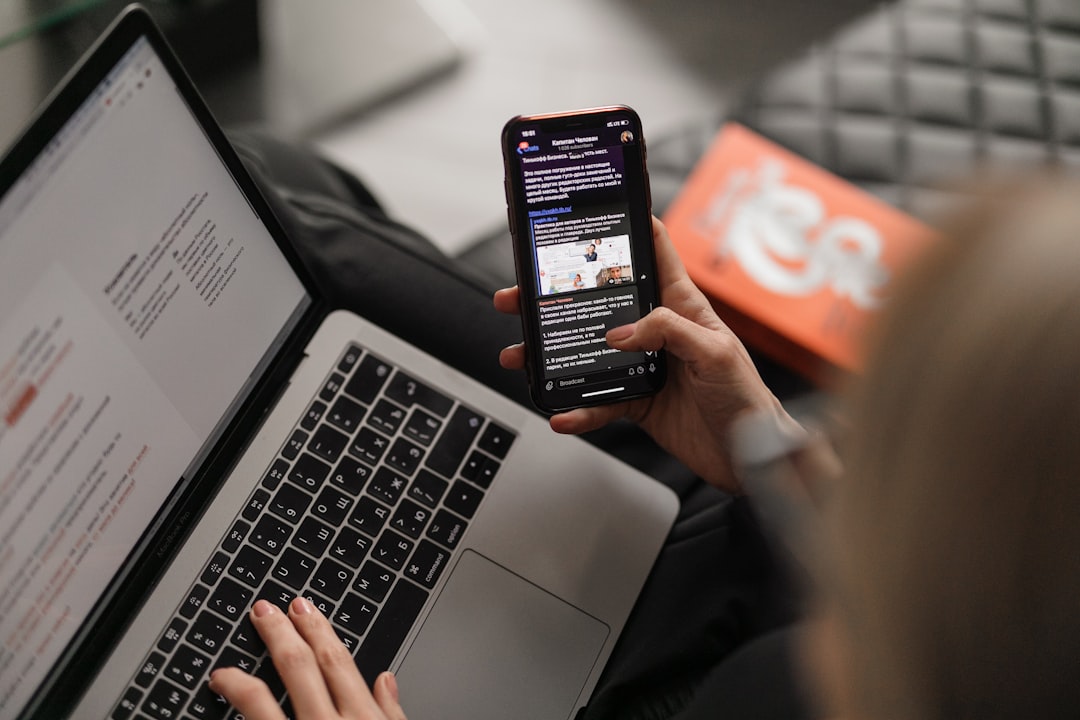
And her idea holds true for a lot of people. Millions of teenagers have grown up with smartphones as the primary interface for navigating life. Need a fact? Your phone supplies it. Lost in a new part of town? Maps will guide you. Hungry and tired? A delivery driver appears at your door. The device isn’t a simple tool for them, but instead has become the default way young people move through the world.
However, this “new default”1 doesn’t mean you, I, or Elana, are incapable of adapting to a less “smart” existence. I’ve watched and read plenty of stories from people who ditch their smartphones for a season, and they tend to arrive at the same conclusion: they still want access to a smart device, but they don’t need it constantly.2
Elana, however, has accepted the default our society presents. A world where we’re bombarded by convenience and conditioned to believe that technological advancement is the only direction progress can take. But by this point in my newsletter writing, you and I know better. Friction is good for us. It forces us to rebuild skills we’ve outsourced and reminds us that our capacity to adapt hasn’t disappeared. It’s simply been underused.

Moreover, the convenience that smartphones provide comes with a cost we rarely name. When a device becomes the default gateway to knowledge, direction, food, entertainment, and even friendship3, it slowly stops being a tool and starts becoming substrate, the surface our lives are built on. And when something becomes that foundational, disentangling from it feels like amputating a limb. That’s what Elana is getting at. Today, I want to challenge you and her while offering a few ideas for loosening our grip on this smartphone‑dependent existence.

The Cure for Disconnection Is Right Outside
Over the last seven years that I’ve been involved in this space, I’ve identified seven reasons people hesitate to switch from a smartphone to a dumbphone. Two of them — fear of boredom and fear of others’ opinions — are directly tied to not knowing who or what is around us. Therefore, understanding your community and the people who live in it is essential to the health of your neighborhood, and the more you participate in it, the better your life becomes.
Smartphones have a way of distancing us from one another. It’s far easier to engage with algorithmically curated content than with the person who lives next door. And that’s profoundly sad. If you resonated with the WIRED article and worry that the version of yourself without a smartphone would somehow be worse, here’s the truth: you won’t be worse. You’ll begin learning how to rely on others instead of believing the myth of self‑sufficiency. You’ll ask for recommendations at the local café. You’ll build a network of people who share your values and are willing to put them into action.
Why am I so sure that this will be you? It’s not because there is any magical condition of being a feature phone owner, it’s because not having a smartphone forces you to interact. The malaise of our moment is the lack of interaction we have with the people we see walking past our homes. It is that our time, attention, money, and data is consumed by a rectangle designed by a company hundred of miles away that doesn’t care about your well-being, but their profit.
Thus, if you want to strengthen your mind and build real fortitude, you have to start interacting again. Your neighborhood may not be the easiest place to begin, so start with the church, the bar, or a local event rooted in your interests. Those small steps will open the door to a richer, more grounded life. A life that doesn’t depend on a smartphone, but is sustained by a community that genuinely cares for you. And that’s when you are ready for the next step of the disentangling journey: learning to prioritize your interests.

Reclaiming Your Taste From the Feed
The most interesting thing that happened after a few months with the Light Phone 2 is that I stopped caring about the popular things people were talking about. Before my dumbphone journey, I checked trending topics constantly and jumped into the chatter as fast as possible. After all, I wanted to be “in the know.”
But as my interaction with online spaces faded, simply because they were no longer available at a swipe’s length, I finally had time to reflect. I could sit with my thoughts and with the conversations I’d had with real human beings. I could actually digest my days. My interests began to narrow toward the things I enjoy discussing for hours: board games, financial independence, urbanism, and healthy eating. And when I talked with someone about topics outside my usual interests, I found myself genuinely curious to learn and listen instead of reaching for my phone.
When you create that kind of space, you start to see how much of your consumption is shaped by the algorithm’s preferences rather than your own. You begin to understand how deeply it influences your thinking once the noise goes quiet. And the surprising part is that when the noise subsides, your mind does not feel empty. It feels yours again. You rediscover the version of yourself that existed before the feed tried to decide who you should be. For many young adults, that version is unfamiliar or even unknown. That is exactly why it is worth finding. Set the algorithm aside, even for a few months, and you will see that this so‑called “unextended” self is not diminished at all but stretched to the full length of the human experience.
After you’ve done that, you will find what many dumbphone owners have realized: their minds were not lost, but nourished to be whole.

Dumbphone Owners Have Recovered Their Minds
As you can imagine, this is a nod to the WIRED article we’ve been discussing. Elana describes herself as someone who is “far gone” from being able to de‑enmesh from the grip of smartphone entanglement. But copious amounts of research show that Gen Z still has plenty of time to rewire their brains. Evidence suggests that fine neuroplasticity extends well into our 30s and that entrenched behavioral patterns do not become truly rigid until much later in life.
So there is time, and plenty of it for most of us. What there may not be is willingness. That is something I cannot supply for you, dear reader. You must be willing to reject convenience, to push back against the programming of society, and to advocate for your own well‑being. It may not be easy in a wired world, but it is absolutely worth it.
And if you’re wondering where to begin, start small. Spend a weekend with a dumbphone and pay attention to what shifts inside you. Take a walk through your neighborhood without headphones and notice the people, sounds, and textures you’ve been filtering out. Choose one offline hobby to nurture, something that reminds you that your hands and mind can work together without a screen mediating the experience. And before the week ends, ask one person for a recommendation (a book, a café, a trail, anything) simply to practice relying on human connection again.
Once you take on this journey, you begin to see that dumbphone users are not losing their minds at all. It is those who have hyperextended themselves into the smartphone world who are at greater risk, all while believing they are perfectly safe.
Jonathan Haidt of After Babel talks about this new default in The Anxious Generation and how parents should not accept it and teach their kids skills instead of tech dependence.
Here are some stories from NPR, The Whole Truth, and Business Insider as samplers. The NPR one delves into this study: https://academic.oup.com/pnasnexus/article/4/2/pgaf017/8016017#506527390. These are short interventions that people committed to. Now imagine what a dumbphone lifestyle change would do over the course of years.
Isn’t it disturbing how much of “friendship” we now outsource to technology, and how quietly the practice of communal living is slipping away? We are wired for connection, yet we increasingly trade embodied presence for bits and dots on a screen.
This article needs to be widely shared.
I've been thinking of switching to a dumbphone and did not know about Light Phone. Thanks for writing!!
This was an excellent article. I switched to a flip phone eight years ago and completely agree...I got my brain back. I was exhausted from constantly battling smartphone and social media addiction, and it was honestly easier to eliminate the temptation altogether. I hadn’t realized how much mental energy I was spending just trying to “moderate” myself until it was gone.